

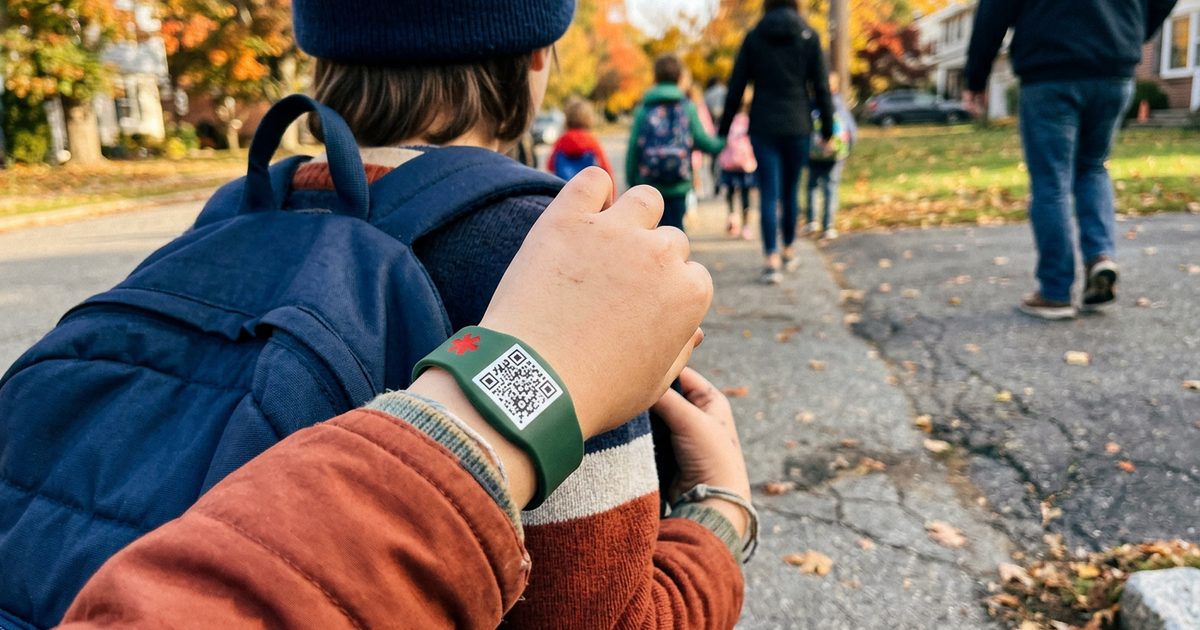
The first walk to school alone, a busy playground or a crowded pool can make parents anxious. An emergency bracelet should help another person identify the child’s needs and reach the family quickly. But QR, GPS and paper cards solve different problems.
GPS actively shows a location but needs power and often a subscription. A paper emergency card is simple but can be lost or overlooked. A QR/NFC bracelet needs no battery and gives a finder access to approved emergency details or a contact route, but it does not track the child. The systems can complement one another.
Three systems, three purposes
A GPS tracker answers ‘Where is my child?’ and depends on battery, network coverage and an app. A paper card stores information offline but may remain hidden in a bag. A visible QR/NFC bracelet answers ‘Who can I contact and what should I know?’ without active tracking or power.
What belongs in a child’s emergency profile?
Keep the profile short, accurate and useful to a first responder. Review it whenever contact details, medication or diagnoses change.
- Child’s name and date of birth.
- At least two trusted emergency contacts.
- Important allergies and conditions.
- Regular medication with clear dosage.
- Relevant communication or support needs.
- Paediatric practice, where useful.
No app, no battery and no private details printed on the outside. A finder scans the bracelet to view approved information or contact the family.

Emergency profile visible on scan
Kids SOS Bracelet | QR/NFC Emergency Profile
€11.90
Privacy: share only what helpers need
Printing a full address and phone number on the outside exposes them to everyone. A QR profile can separate visible identification from details released after scanning. Still apply data minimisation: do not add information merely because the field exists, and protect profile editing with secure access.
If a child goes missing
The idea that parents must wait 24 hours before reporting a missing child is false. Contact the local police immediately when a child is missing or at risk and provide a current photo, clothing description and last known location. A bracelet is an aid, never a replacement for supervision or emergency procedures.
For the wallet or school bag: our printable medical alert card takes two minutes to fill in, with emergency contacts, allergies and medication on a credit-card-sized card. No sign-up.
Read more: What to Put on a Medical Alert Card: Checklist for Every Case
Frequently asked questions
At what age is an emergency bracelet useful?
There is no fixed minimum age. It becomes useful whenever a child spends time away from a parent—for example at school, on trips or in crowded places.
Is QR or GPS better?
They serve different purposes: GPS locates actively; QR/NFC provides information and contact without a battery. Some families combine both.
What information should be included?
Use current emergency contacts, allergies, conditions and essential medication. Include only information that can genuinely help.
Must parents wait 24 hours before reporting a missing child?
No. Contact the police immediately if a child is missing or in danger.
Conclusion: Choose the system for the actual risk: GPS for active location, QR/NFC for battery-free identification and contact, and a paper card as an offline backup. Keep every profile current and minimal.


